The Rat, the Rewards, and Me

Desktop App

Dashboard

Gamification

End-to-end

🎯 Thousands of Students, Fixed Launch Date → Designed for real scale under hard deadlines
🚀 End-to-End Ownership → Desktop student app + admin dashboard, fully owned
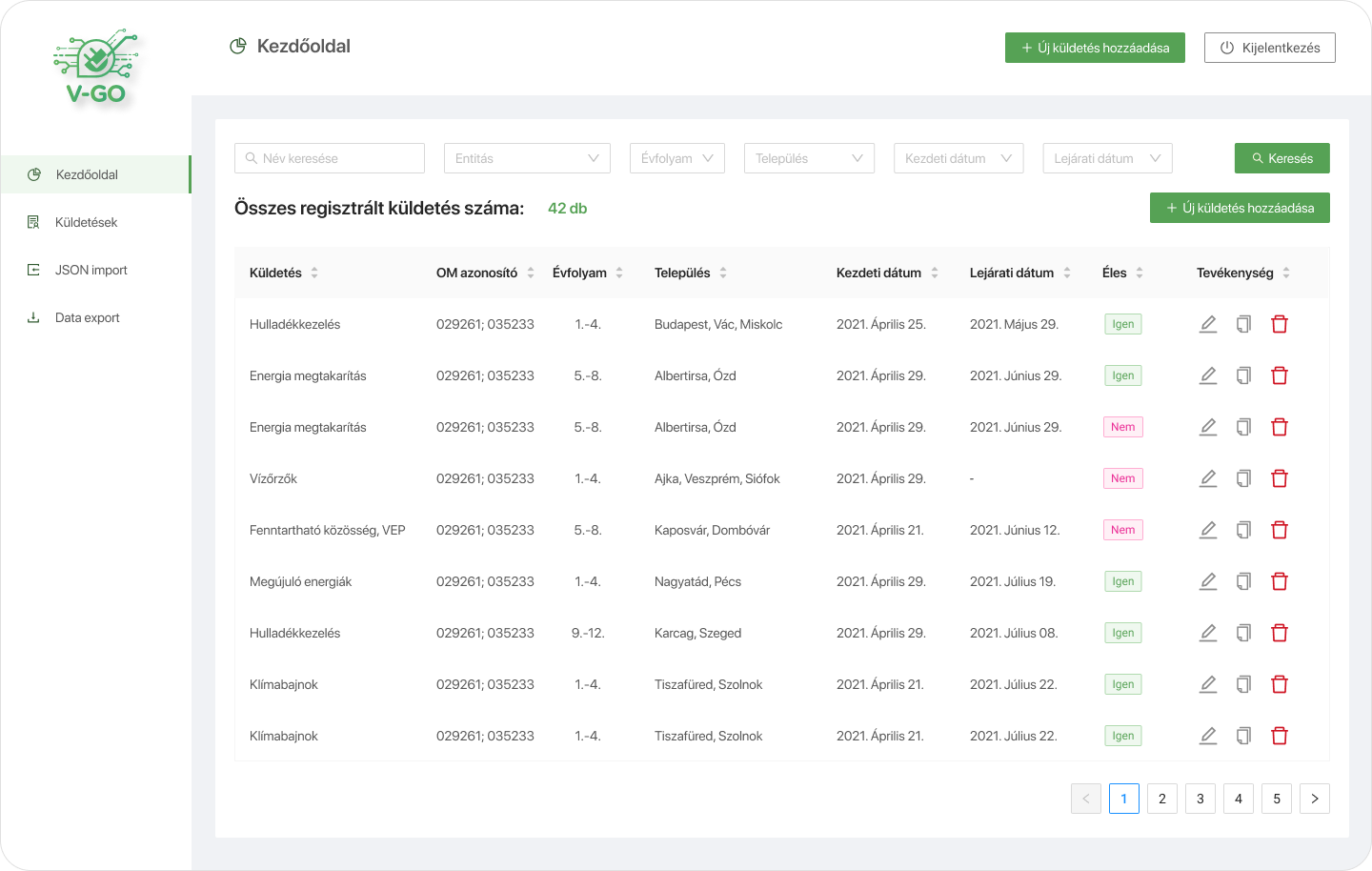
📊 Multi-Campaign Dashboards → Manage campaigns, track participation, questionnaire data & stats
Reduced Operational Friction → Clear structures so non-technical stakeholders could act fast
🧠 Problem-Solving Under Pressure → Identified gaps, edge cases, and risks early to avoid last-minute chaos
🤝 Front-End Friendly Delivery→ Figma structured for parallel dev in a 2-month design+build window
ROLE

Product Designer

TEAM

Graphic designers, PMs, engineers

TOOLS

Figma

SCOPE

Mobile (iOS/Android)

Desktop App

Admin dashboards

About the Project

V-GO was a student-focused gamification campaign launched for Earth Day in 2021, supported by sponsors including MBH Bank, Szerencsejáték Zrt, and E.ON Hungary.
Students completed challenges and questionnaires to earn rewards, while campaign owners needed clear tools to manage multiple campaigns, track participation, and analyze results.

The visual identity and mascot were created by graphic designers, but the product structure, desktop experience, and internal tooling needed to be designed and delivered quickly.

Constraints were real:
- Fixed campaign launch date
- Tight timeline (≈ 2 months total for design + development)
- Thousands of users expected at launch
- The goal was to move fast without sacrificing clarity, consistency, or operability.

My Contribution

I owned the desktop student experience and the full admin dashboard, designing both end-to-end and ensuring they worked together as a coherent system.

What I did:
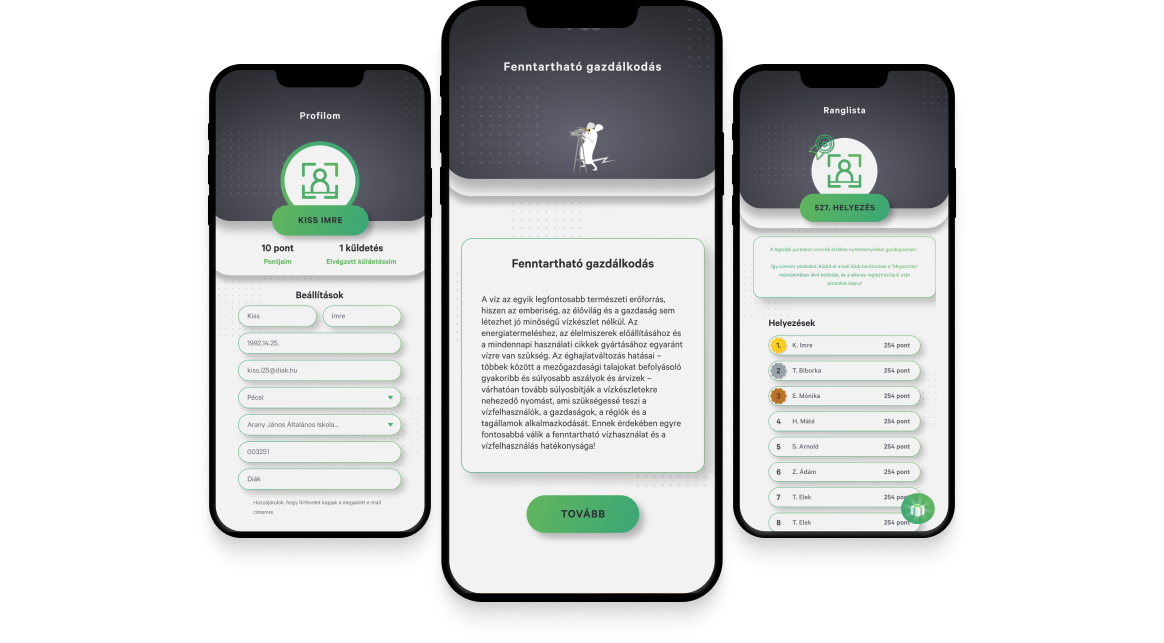
- Designed the complete desktop student app: Translated mobile concepts into a clear desktop experience, filling gaps in flows, edge cases, and interactions so students could complete challenges without friction.
- Designed and structured the admin dashboard from scratch: Built tools that allowed campaign owners to: Manage multiple campaigns, track participation and statistics, see who completed questionnaires and how and monitor campaign progress and engagement at a glance
- Made designs implementation-ready in Figma: Structured files clearly for developers, created reusable components and consistent patterns, and added missing states, empty cases, and logic. -> Developers explicitly confirmed that this reduced back-and-forth and sped up implementation.
- Acted as the bridge between branding, product, and engineering: Preserved the playful visual identity while ensuring everything was feasible, scalable, and understandable under real delivery constraints.

My Approach

With a tight deadline and a public campaign launch, my focus was on reducing risk and cognitive load early. How I approached the work:

1. Start from operations, not just screens
Instead of designing “nice dashboards,” I first asked:
- What decisions do campaign owners need to make daily?
- What do they need to check quickly vs. in detail?

- This shaped the dashboard structure, hierarchy, and data visibility.

2. Design for scale from day one
Knowing the campaign would involve thousands of students and multiple campaigns, I:
- Avoided one-off layouts
- Reused patterns intentionally
- Designed components that could handle growth, not just launch day

3. Close gaps early to save time later
Under a short timeline, missing states and unclear flows are expensive. So I proactively:
- Identified incomplete or ambiguous screens
- Added edge cases, empty states, and interaction logic
- Clarified behavior before development started
- This significantly reduced last-minute fixes.

4. Make Figma a communication tool, not just a design file
I structured files so engineers could:
- Find things quickly
- Understand intent without long explanations
- Trust the designs during implementation
- This was especially important given the parallel design–development workflow.

Impact & Outcomes

- Successfully supported a large-scale campaign used by thousands of students
-
Enabled campaign owners to manage multiple campaigns and analyze participation efficiently
-
Helped the team meet a fixed public launch date under tight constraints
- Improved collaboration speed and clarity between design and development

While exact usage metrics weren’t shared, the campaign was considered successful by stakeholders and sponsors.

Reflection

V-GO looks playful, but it was a serious product challenge.

This project reinforced that good product design under pressure is about prioritization, structure, and clarity, not just visuals. Owning both the student-facing desktop app and the internal admin tools allowed me to design the full ecosystem, not isolated screens.

It strengthened how I think about:
- Designing for scaleInternal tools as first-class products
- Shipping high-quality work under real deadlines

And yes, the rat absolutely deserved his spy gadgets. 🐀🕵️♂️