Cybersecurity
B2B SaaS
UX Architecture
Design System
🎯 UX-First Redesign → Structure and clarity over decoration
🧠IA & Flow Thinking → Reduced cognitive load
🤝 Engineering Collaboration → Feasible, scalable solutions
⚡ Pragmatic Problem Solving → Designed for real constraints
🚀 Ownership → From problem framing to delivery

UXÂ Designer
Design System Architect
IA Strategist
Worked closely with Balasys’s in-house designer and my development team.
Figma
After Effects
Adobe Illustrator
Design system
UX improvements
Prototypes
Dev handoff & documentation
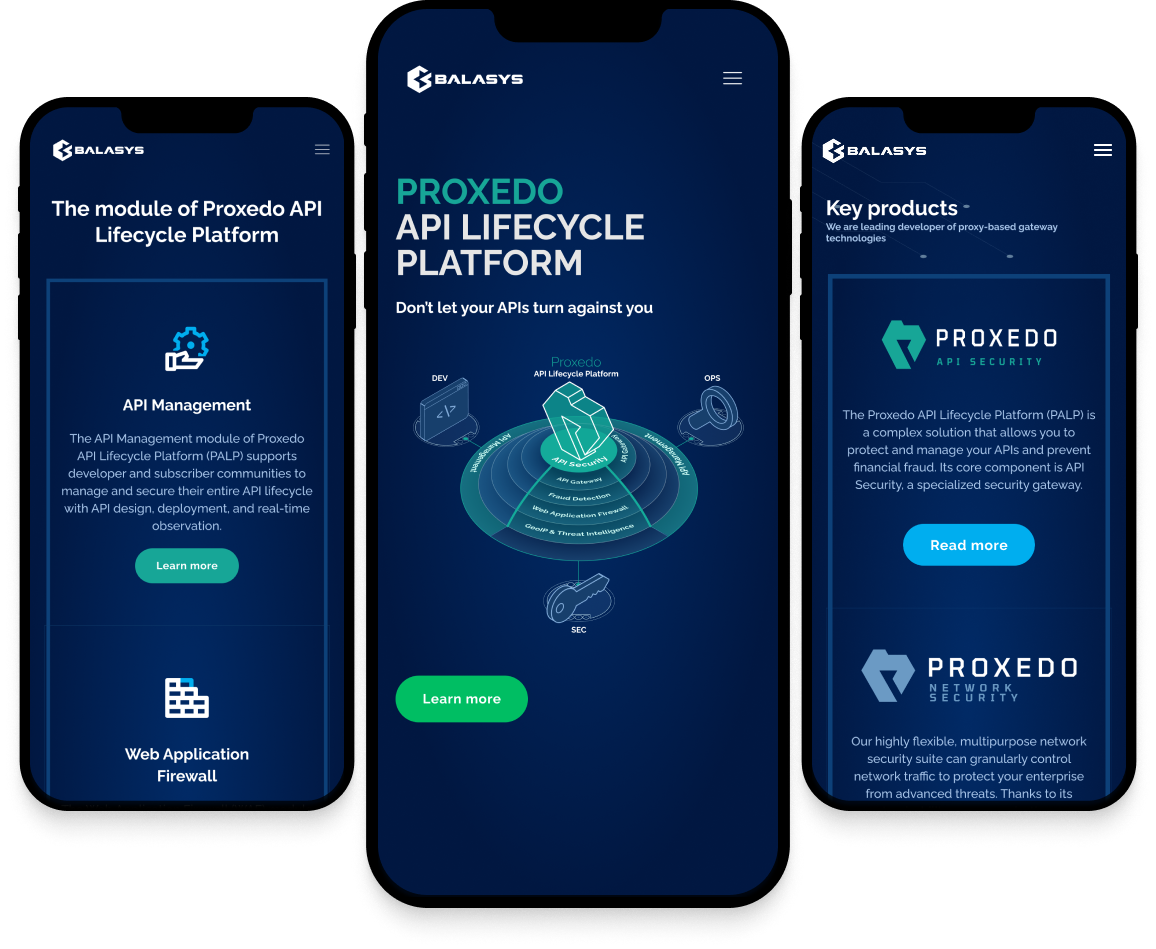
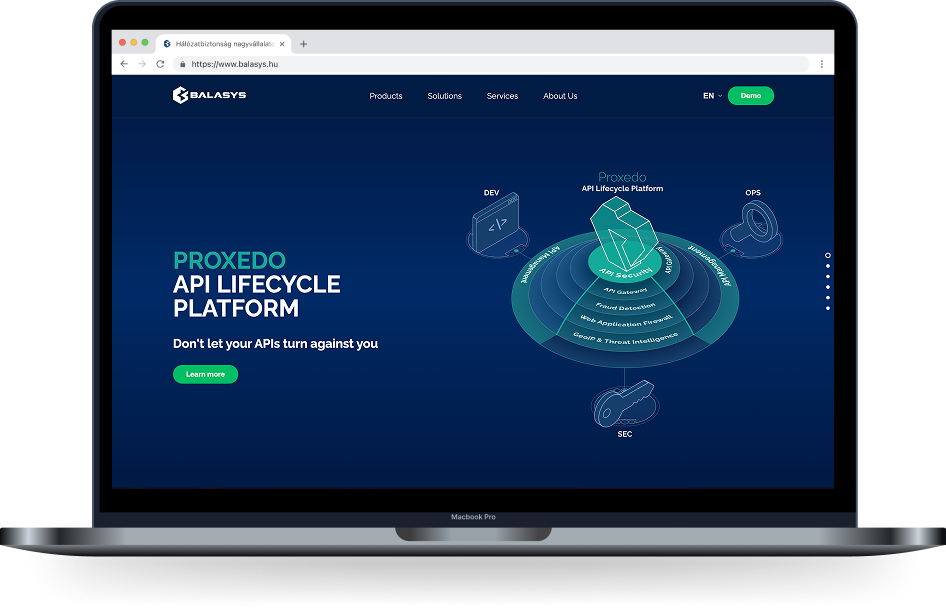
Balasys needed a website that clearly communicated its products, services, and expertise. The existing site had grown organically and no longer reflected the company’s scope or technical maturity. Content was hard to scan, navigation was unclear, and key information was buried.
My role was to redesign the experience from a UX and product perspective: clarifying structure, improving comprehension, and supporting engineering implementation with clear, scalable design decisions.
This case focuses on UX, IA, and interaction design. Design system work is covered separately.
The challenge wasn’t visual polish,it was understanding.
Users needed to:
- quickly grasp what Balasys does,
- distinguish between services, products, and expertise,
- navigate complex content without cognitive overload.
At the same time, the solution had to be:
- technically feasible for engineers to implement,
- consistent across pages,
- flexible enough to support future growth.


I treated the website as a product surface, not a marketing asset.
My thinking process followed three core principles:
‍1. Structure before visuals
Before designing UI, I focused on information architecture: grouping content logically, defining hierarchy, and deciding what not to show upfront.
‍2. Reduce cognitive load
I actively removed unnecessary complexity. If a section couldn’t be understood in a few seconds, it was restructured or simplified.
‍3. Design with engineering in mind
I collaborated closely with engineers to ensure layouts, interactions, and states were realistic, consistent, and scalable, avoiding one-off solutions that wouldn’t hold up in code.
UX & Information Architecture
I reworked the site’s structure to better reflect user intent rather than internal company structure. This included:
- redefining navigation logic,
- clarifying page hierarchy,
- prioritizing key entry points and user paths.
Interaction & Flow Design
‍I designed page-level flows and interactions that guided users naturally through content, helping them understand offerings without overwhelming them.
Visual UX Decisions
‍The visual design supported clarity rather than decoration. Layouts were clean, predictable, and easy to scan, with emphasis on readability and hierarchy.
Collaboration with Engineers
‍I worked closely with the development team throughout the process:
- aligning on constraints early,
- adjusting designs based on technical feedback,
- ensuring smooth handoff and realistic implementation.
This collaboration helped avoid late-stage surprises and kept the design grounded in real delivery constraints.

- Clearer content hierarchy and navigation.
- Improved scannability and comprehension.
- A site structure that supports future expansion.
- Fewer one-off design solutions, more consistency across pages.
While formal metrics weren’t tracked, feedback from stakeholders confirmed that the new structure made the site easier to understand and navigate, both for visitors and internal teams.
This project reinforced something I strongly believe in: good UX is mostly invisible.
Balasys wasn’t about flashy interactions or visual experiments. It was about making complexity feel manageable, aligning design with engineering reality, and delivering a solution that would age well.
It also strengthened my ability to:
- think in systems even outside design systems,
- collaborate deeply with engineers,
- make pragmatic trade-offs without sacrificing usability.
That’s why this project belongs in my portfolio: it reflects real product thinking, not surface-level UI work.